Why KPI Dashboards Determine Whether an Interim Engagement Succeeds or Fails Interim engagements arise in moments when organizations are vulnerable. These are phases where something has already begun to wobble: key finance and leadership roles remain vacant, closing processes come under pressure, M&A projects overwhelm existing teams, compliance risks escalate, ERP implementations run unstable. Companies bring in an interim manager precisely when there is no time for long onboarding and immediate orientation is required. Yet this orientation is often exactly what is missing at the start. Critical KPIs are unavailable or exist only as fragmented Excel files. This creates the core paradox: companies expect immediate results, yet provide no immediate transparency. This is exactly why interim managers need KPI dashboards. Not as a reporting gadget, but as a survival tool. A KPI dashboard is the moment when assumptions turn into facts. It ends the debate about which number is correct and provides the foundation for decisions, priorities and actions.
Why KPI Dashboards Define Interim Engagement Steering Interim Managers Work Under High Uncertainty Interim managers rarely start in stable situations. A dashboard acts like a compass. It immediately shows where the greatest risks lie, which processes are blocked, and where capital is incorrectly tied up.
Data Quality is Often the Most Underestimated Problem Many companies believe a dashboard is just a visualization tool. In reality, it is a diagnostic instrument. It reveals data breaks, inconsistencies, booking errors and systemic weaknesses.
Dashboards Connect Departments Interim engagements rarely fail due to lack of competence. They often fail due to lack of coordination. A dashboard creates a common language and forces a central view on liquidity, open items, closing progress and compliance risks.
Dashboards Are Risk Management In many interim engagements, risk management is the central success factor. A dashboard makes risks visible before they lead to audit findings or payment problems.
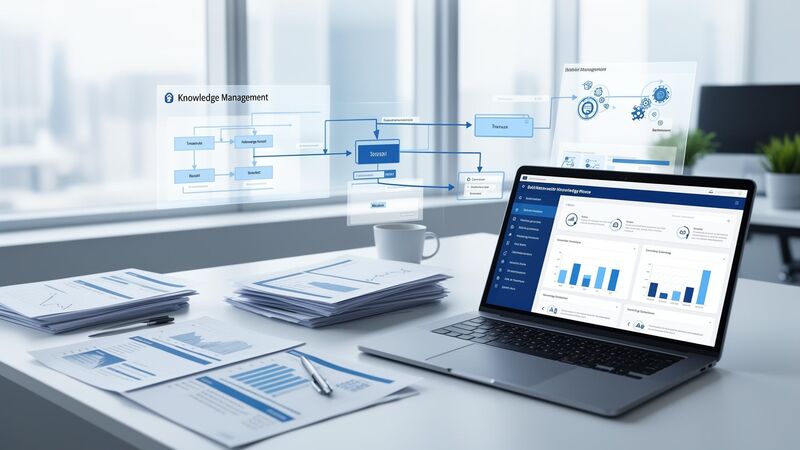
How a Professional KPI Dashboard is Built Three-Level Architecture An effective dashboard distinguishes three levels: The management view summarizes the most important KPIs. The process view maps Order-to-Cash, Purchase-to-Pay and Record-to-Report. The root cause analysis reveals why deviations occur.
The KPI Set In finance-related engagements, these are typically liquidity metrics, closing metrics, open item structures, intercompany reconciliations and forecast deviations. Each KPI receives a clear definition, a responsible KPI owner and clear evaluation logic.
Traffic Light Logic and Evaluation Mechanics The traffic light logic is the core of decision-making. Green means target achievement, Yellow means action required, Red means immediate intervention.
Conclusion KPI dashboards define the success of an interim engagement. They create transparency, speed, steering power, risk control and sustainability. If you need support with developing a KPI dashboard, I support you as an experienced Interim Manager for Finance & Controlling.